Editorial Stock Photography in 2026: The Niche AI Can't Replace
By raof010 · Published October 16, 2026 · Updated October 16, 2026
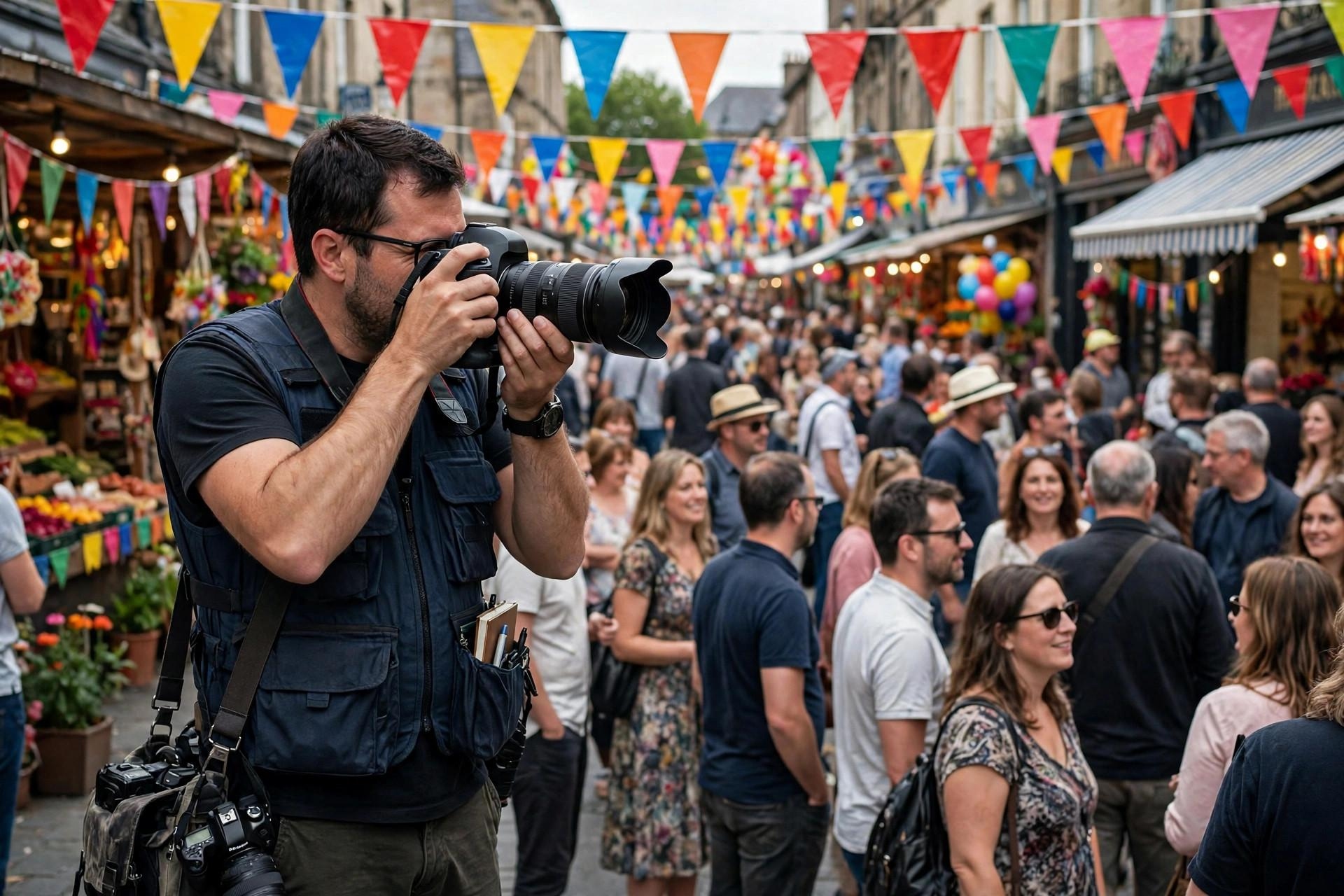
Every contributor has felt the same pressure in 2026: generative AI now floods stock marketplaces with cheap lifestyle images, icons and flat lays. But there is one corner of the market where AI imagery simply does not belong — editorial. Editorial stock photography exists to document reality: real protests, real festivals, real streets, real public figures. A news editor buying an image of a city festival needs proof it actually happened. AI cannot provide that, and the platforms' own rules make sure it never does. This guide explains exactly how editorial stock photography works in 2026, what each platform accepts, the metadata rules that pass review, and how to turn your access to the real world into a durable contributor income stream.
What Editorial Stock Photography Actually Is
Editorial stock photography covers newsworthy events, matters of public interest, recognizable public figures, and culturally significant scenes — images sold for use in news, documentaries, blogs, textbooks and educational contexts. The defining feature is truth: an editorial image must faithfully depict a real subject in a real moment.
This is also the feature that keeps AI out. An AI-generated crowd at a "festival" is fabrication, not documentation. Buyers who pay for editorial are paying for verification, and the platforms enforce that boundary in their submission rules. When marketplaces reject AI imagery as editorial, they are protecting the trust the entire category runs on.
One more thing to understand upfront: editorial licenses are limited. Editorial images may not be used for commercial advertising or promotion, and buyers may not alter them beyond minor technical adjustments or slight cropping. Most platforms require a credit line on editorial use. Contributors sometimes see this as a limitation, but it is also the point: the restriction is what keeps the category credible.
The Shutterstock Editorial Rules in 2026
Shutterstock is the most accessible editorial path for individual contributors in 2026. Here is how its system works.
Editorial is a flag, not a category. When you submit, you mark the file as editorial with a dedicated flag. Do not type "Editorial" into the categories field — that is one of the most common rookie mistakes, and it can get a file rejected on metadata alone.
Three subtypes exist. Shutterstock recognizes documentary editorial (real photographs of real events), illustrative editorial (photographs that illustrate a subject editorially, often featuring branded objects or landmarks), and editorial vector illustrations (vectors depicting brands, landmarks or events). Know which one your file is before you submit — reviewers expect each subtype to behave like itself.
Descriptions need a location and a year. Every editorial description must state where and when the image was taken. The safest format is CITY, COUNTRY - MONTH DAY, YEAR: Description. Missing or inaccurate location and date information is one of the top metadata rejection reasons for editorial files.
No model releases — but no staging either. Editorial submissions do not require model releases for recognizable people, because news photography cannot pause for paperwork. The tradeoff is strict: the scene must be genuinely real. Staged scenes with paid models dressed up to look documentary do not qualify. If you set it up, it is commercial work, and it needs releases.
AI is banned outright. Shutterstock's contributor rules prohibit AI-generated content, and its non-licensable content list expressly includes content that appears AI-generated. An AI "news photo" will be rejected — and repeated policy breaches can put an account at risk. This is the clearest version of the editorial moat: on Shutterstock, documentation is for cameras only.
Titles and keywords still matter. Editorial files follow the same metadata quality standards as commercial work: a factual title describing the subject, relevant keywords, and at least one category. Accuracy is everything — metadata for editorial must truthfully describe what is in the frame.
The Adobe Stock Editorial Reality Check
Adobe Stock's editorial picture has an important split that many contributors miss.
Documentary editorial: partner agencies only. Adobe currently sources its editorial collection through trusted partner agencies and states that it is not accepting editorial submissions from individual contributors. If you want your documentary news photographs on Adobe Stock directly, that door is closed for now. This is a fact worth knowing before you plan around Adobe editorial earnings.
Illustrative editorial: open, but gated. Adobe runs a separate Illustrative Editorial collection for staged or illustrated work that depicts real brands, places or events in an editorial context — think a photograph of a branded storefront in its real-world setting during a news event, or an editorial cartoon commenting on an industry launch. Two hard rules apply: contributors need 100 or more downloads in their account history to submit, and AI-generated content is not accepted for this collection. Adobe also disqualifies images with recognizable people, restricted events like conventions and sports games, and digitally manipulated trademarked logos. The message is consistent: illustrative editorial must accurately depict the real world.
The practical takeaway: most individual contributors will build their editorial work on Shutterstock, while Adobe's illustrative editorial becomes a realistic target once a portfolio crosses the 100-download mark. That is a concrete milestone to aim at. This split also explains what Adobe accepts and what Shutterstock bans when it comes to AI-generated editorial content.

Why This Niche Is AI-Proof (And Which Parts Still Aren't)
Editorial's protection comes from buyers' legal needs, not just platform rules. A publisher licensing a news image needs one that is truthful, accurate and defensible. An AI-generated image cannot be accurate by definition — it depicts something that never happened. That is why editorial demand cannot be satisfied by generated content no matter how good the models get.
But be honest about the limits. Editorial is AI-proof in a specific sense: the documentary core of the category. Around the edges, competition still exists:
Illustrative and conceptual images that complement news stories can be commissioned as illustrations or AI-generated graphics by publishers directly.
Archive and evergreen editorial (generic city skylines, famous landmarks) competes with every other contributor's editorial files — the moat is against AI, not against other photographers.
Speed matters. Editorial buyers often need images of an event within hours or days. Contributors who upload promptly earn the premium; files uploaded months later compete on price.
So the moat is real, but it rewards contributors who are fast, local and consistent — not anyone who simply labels files as editorial.
The Metadata That Passes Review
Editorial review failures are almost always metadata failures, not photography failures. Use this checklist before every editorial submission:
Date and location first. Lead the description with the location and the date in the platform's expected format.
Describe the actual scene. The description must be a factual sentence about what is in the frame — who, what, where, when and why. No promotional language, no keyword stuffing, no camera-talk.
Caption like a news editor. Write the description as though a newspaper were running it under your photograph. If it would not survive an editor's desk, it will not survive review.
Set the editorial flag, not the category. On Shutterstock, mark editorial with the dedicated flag and choose a real subject category alongside it.
Match keywords to the visible content. Every keyword should describe something actually visible in the frame. Editorial reviewers are strict about keyword accuracy.
Never claim what the image doesn't show. If your festival photo does not clearly show which festival it is, do not name it. Inaccurate editorial captions are a trust violation, not a small mistake.
If review keeps biting, revisit the most common reasons stock photos get rejected and fix them one by one.

A Practical Path Into Editorial in 2026
You do not need a press pass to start. Here is a realistic plan for a contributor beginning editorial work this year.
Step 1: Start with what you can already access. Local events are the best editorial inventory: markets, festivals, public gatherings, sporting matches at local level, street life, construction and development, weather events. You already live somewhere — that is your assignment desk.

Step 2: Learn the caption discipline on commercial-style work first. If you are new to stock, get comfortable with factual descriptions and accurate keywords on commercial files before adding editorial's stricter rules.
Step 3: Submit editorial to Shutterstock. Flag files correctly, include location and year, and treat every caption as a news caption. Expect a learning curve on the first batch — editorial reviewers are strict, and that is the point.
Step 4: Work toward Adobe's 100-download milestone. Illustrative editorial on Adobe Stock requires 100 downloads in your account history. Building a solid commercial base while shooting editorial gives you two income streams and a path to the gated collection.
Step 5: Build a cadence around real events. Check your city's event calendar monthly. Public festivals, elections, seasons and civic events are editorial inventory that nobody else in your exact location can duplicate. Upload quickly — editorial freshness decays fast.
Step 6: Track earnings by level. On Shutterstock, editorial downloads feed the same annual earnings system as commercial ones, so editorial strategy should plan uploads with the annual reset in mind.
Key Takeaways
Editorial stock photography documents real people, places and events — and buyers pay for that verification, which AI imagery can never provide.
Shutterstock is the open editorial path for individual contributors: use the editorial flag (not a category), include location and year in every description, and never stage what you call documentary.
Adobe sources documentary editorial through partner agencies only; individual contributors can target the Illustrative Editorial collection after 100 downloads — with AI-generated content explicitly excluded.
Editorial licenses are restricted to news and public-interest contexts, require credit lines, and forbid commercial use or heavy modification.
The moat rewards speed and locality: upload real events promptly, caption like a news editor, and let metadata accuracy do the heavy lifting at review.
FAQs
Q: Can I sell editorial photos if I am not a professional photographer?
A: Yes. Shutterstock accepts editorial submissions from any contributor whose work meets its technical and legal standards. You do not need press credentials — you need real events, accurate metadata and clean files.
Q: Do editorial photos earn more than commercial ones?
A: Not automatically. Editorial downloads feed the same royalty systems as commercial files on most platforms, and editorial licensing restrictions narrow the buyer pool. The advantage is differentiation: far fewer contributors compete in editorial than in generic lifestyle categories.
Q: Can I convert a commercial photo into editorial by changing the flag?
A: Only if the content genuinely qualifies. A staged lifestyle shoot with models cannot become documentary editorial by toggling a setting — and misflagging staged content as editorial is a policy violation. The scene determines the category, not the checkbox.
Q: Does AI-generated content ever qualify as editorial?
A: No. Shutterstock bans AI-generated uploads entirely, and Adobe Stock excludes AI-generated content from its Illustrative Editorial collection. Editorial exists to document reality.
Q: What is the biggest editorial rejection reason?
A: Metadata. Missing or inaccurate location and date information, keyword-stuffed titles, and descriptions that do not match the visible content cause the majority of editorial rejections. Fix the caption and most problems disappear.