Stock Photo Trends 2026: What Buyers Are Actually Downloading
By raof010 · Published October 13, 2026 · Updated October 13, 2026
Every year, thousands of new contributors upload images and wonder the same thing: what are buyers actually clicking "download" on? Trend reports from the major marketplaces give us a clearer picture for 2026 than ever before - and the answer is shifting in ways that favor everyday contributors.
This year's buyer behavior points in one consistent direction: authenticity. From Shutterstock's trend reporting to Adobe Stock's category rankings, the message from customers is the same. They want images that look like real life, not a staged brochure. Below, we break down the themes actually moving downloads in 2026, and what each one means for your next shoot.
1. Authentic Human Moments Lead the Pack
Shutterstock's 2026 trend reporting identifies "Authentic Human Moments" as a top trend - and the buyers are backing it up. A survey cited by Nightjar found that 86% of consumers say authenticity is a key factor in which brands they support, and that preference is bleeding directly into the images those brands license.
What does "authentic" look like in practice? Genuine expressions instead of posed smiles. Real relationships instead of stock-photo families frozen in a group hug. People in motion - laughing mid-conversation, working with actual focus, living in actual rooms. The staged, glossy "lifestyle" look that dominated the 2010s is losing ground to imagery that feels like a frame pulled from real life.
For contributors, this is good news. You do not need a studio or a casting agency to compete here. Some of the strongest-performing lifestyle imagery right now comes from creators shooting real people - friends, family, neighbors - in genuine settings. If you have ever held back a frame because it looked "too candid" for stock, 2026 is the year to upload it.
2. "Living Imperfection": Raw Beats Polished
Closely related is a trend writer Natalia Bazilenco described on Medium in February 2026 as "Living Imperfection": buyers actively choosing raw, relatable reality over hyper-realistic perfection. Her example says it all - a messy home office shot in a Y2K direct-flash style, exactly the kind of frame that would have been rejected a decade ago for looking too rough.
This is a structural shift, not a fad. Designers and marketers are tired of imagery that looks AI-polished to the point of unreality - and since genuinely AI-perfect imagery is now cheap and abundant, human imperfection has become a differentiator. Dust, clutter, harsh flash, slightly awkward framing: these are signals of realness that buyers are paying for.
For your portfolio, the takeaway is simple: stop over-culling. The frame with the slightly blown highlight, the wrinkled bedsheet, the cluttered desk - metadata it honestly and let it compete. Imperfect but genuine often outperforms perfect but generic.
3. People Remain a Top-3 Category
Amid all the talk of AI and abstraction, the fundamentals have not moved. "People" remains a top-3 downloaded category on Adobe Stock, which confirms that human-centered imagery is still the backbone of the market. Trends shift; the demand for diverse, well-lit, emotionally legible people shots does not.
What has changed is the *kind* of people imagery that sells. Buyers want diversity that looks natural, not assembled - varied ages, body types, and backgrounds shown in everyday contexts rather than tokenistic group shots. Work-from-home professionals, multigenerational families, solo portraits with genuine character: these keep selling because they slot into the stories brands are actually telling.
If you are building a portfolio from scratch, people photography is still the highest-leverage investment you can make. Just shoot it the way 2026 buyers want it: real, imperfect, and diverse.
4. Abstract and AI-Generated Backgrounds Are Top Sellers
Here is the trend that surprises most contributors: abstract and AI-generated backgrounds are among the top-selling categories on Adobe Stock. Designers use them constantly as filler content — hero-section backgrounds, presentation backdrops, social media canvases - which gives them enormous download volume.
This is a volume play with low shoot costs. You do not need a camera, a model, or a location. Gradient meshes, soft geometric forms, blurred light textures, subtle 3D renders - these are assets you can produce with digital tools and upload at scale. They will never be your most prestigious images, but they can be your most consistent earners.
The catch is competition: because the barrier is low, the category is crowded. The contributors who win here are the ones who treat backgrounds like a product line - consistent series, tight keywording, seasonal color palettes - rather than uploading a handful of random textures.
5. Tech, Wellness, and Sustainability Keep Climbing
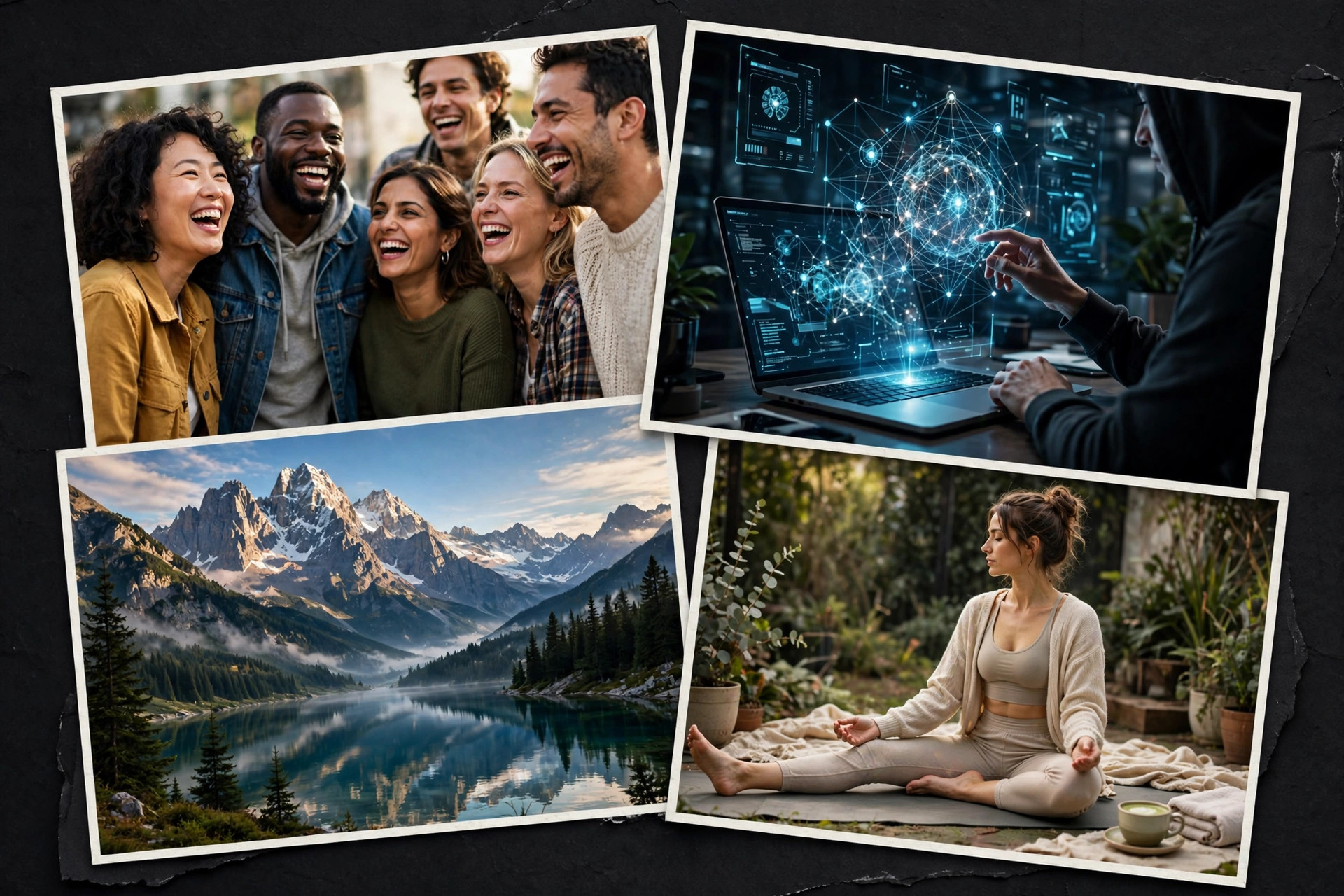
Alongside the headline trends, several evergreen themes continue their upward march. Tech and AI concepts - robotics, cybersecurity, cloud computing - remain in strong demand as businesses race to illustrate stories they cannot photograph directly. Wellness imagery (mindfulness, fitness, healthy food) and sustainability themes (renewable energy, nature conservation) keep gaining as brand values shift toward them.
Travel and nature imagery is also showing resilience. Buyers are licensing landscapes, city scenes, and outdoor lifestyle shots as travel content rebounds and "reconnect with nature" campaigns continue. Remote work imagery - home offices, video calls, hybrid collaboration - remains a steady seller now that distributed work is permanent for much of the knowledge economy.
The strategy here is evergreen coverage with a fresh eye. A cloud-computing concept shot with an authentic, imperfect aesthetic beats a glossy render every time in 2026. Combine the themes: real people working with real technology, in real spaces.
6. The Marketplace Itself Is Consolidating
One development worth noting: market consolidation continues, with Freepik's acquisition of EyeEm being a prominent example. Fewer, larger players means more standardized expectations and, often, more competition per category - but it also means that the winners consolidate buyers. Being on the surviving platforms with a well-keyworded portfolio matters more than being spread thin.
Consolidation also rewards specialization. As libraries get bigger, buyers lean harder on search - which means your metadata quality is as important as your imagery. A technically perfect photo with vague keywords loses to a good photo with precise, buyer-language keywords.
If you take one thing from the 2026 trends, make it this: buyers are paying for realness. Shoot authentic people, embrace imperfection, keep people imagery at the core of your portfolio, build a side line of abstract backgrounds for volume, and stay stocked on tech, wellness, and sustainability themes.
Then keyword everything like a buyer searches - specific, plain-language, and honest. The market has never been more favorable to contributors who point their camera at real life. Stop chasing perfection, start chasing truth, and let the trends do the rest.