Stock Photo Trends for 2027: What to Shoot Now Before the New Year
By raof010 · Published November 21, 2026 · Updated November 21, 2026
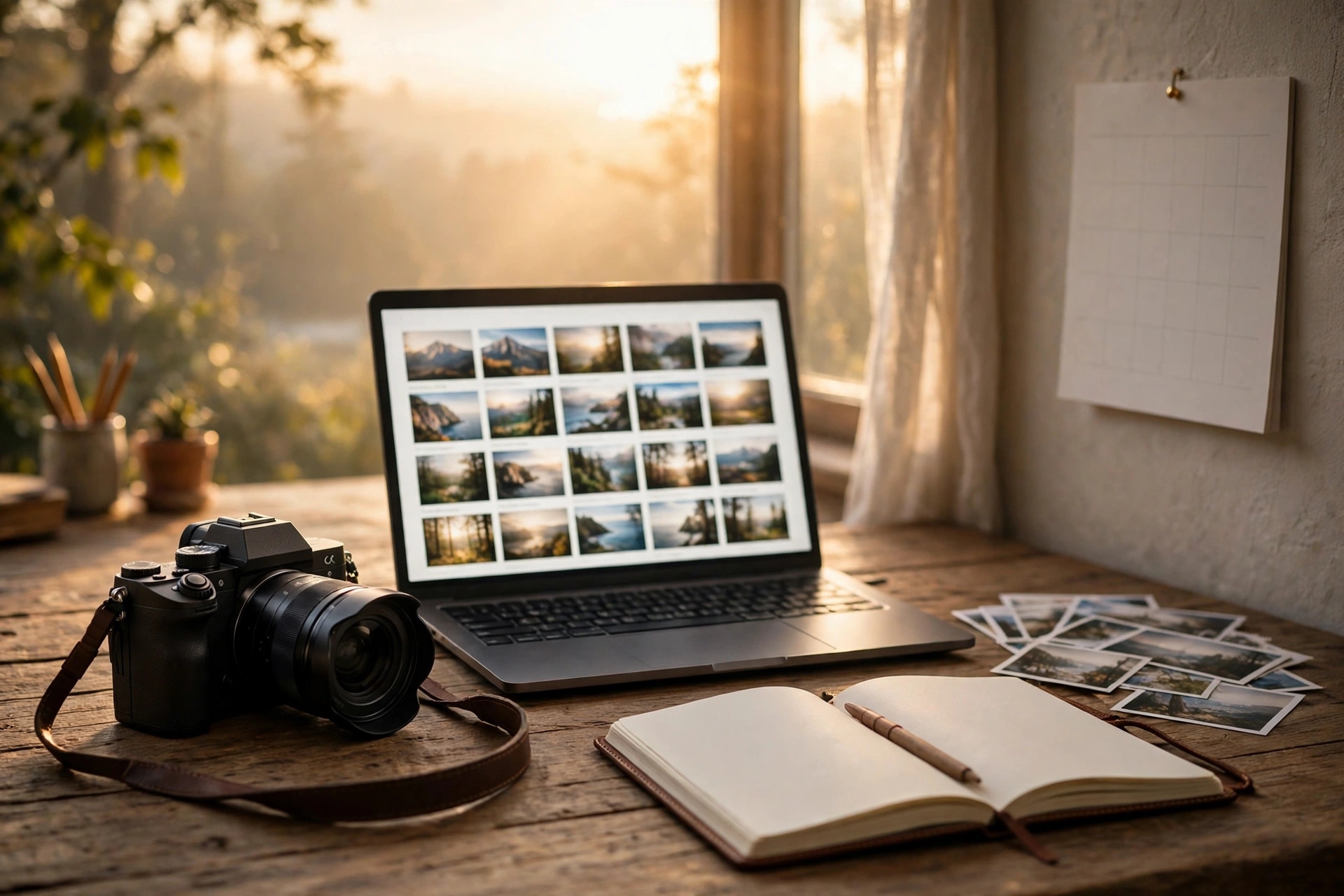
Every December, the same question lands in contributor groups: what should I shoot for next year? In 2026 the answer was mostly "more of what already sells." For 2027, the answer is different. The trend research published this autumn — from Adobe, Shutterstock, Depositphotos and Stocksy, plus a 2027–2028 licensing forecast from ArtSHINE — points in one direction: buyers want photographs that are harder to replace. Specific people, specific places, specific cultures, specific moments. Generic is abundant. Distinctive is scarce. That is good news if you shoot with a camera instead of a prompt. AI can generate a perfect sunset, a smiling handshake, a flat-lay desk. It cannot photograph your neighbour repairing a chair, your town's festival night, or the exact light in your street at 6 a.m. This guide breaks down the five trends shaping 2027 demand, the subjects to stop shooting, and a December shoot list you can finish before January — so your first uploads of 2027 land in front of buyers while the gaps are still open.
Why 2027 Rewards Specific Photos, Not More Photos
The market itself is still growing. One market estimate puts the global stock images market at about $4.05 billion in 2026, rising to about $4.23 billion in 2027. Demand is not the problem. Supply is: millions of new files arrive every month, and most of them look like the files already there. When supply grows faster than demand, the photos that earn are the ones a buyer cannot find anywhere else.
ArtSHINE's 2027–2028 forecast states the shift plainly: photography will become more valuable when it becomes more specific. Specific person. Specific place. Specific culture. Specific moment. Specific story. Specific photographer. That list is a shooting brief in itself — and it is the opposite of how most contributors work, uploading a little of everything and hoping the algorithm notices.
Adobe's research adds weight to the same point: 95.2% of content leaders consider visual content critical to their businesses, while demand for content keeps rising fast. Buyers are not buying fewer photos. They are buying more carefully, and the bar for what counts as useful has moved from "technically clean" to "believably real." Fifty files of one specific, real subject will earn more in 2027 than five hundred generic files spread across every category.
Trend 1: Real Life, Shot Like a Documentary
The first trend is the biggest one: commercial brands are borrowing the visual language of journalism and documentary photography. Buyers increasingly want something more believable than a staged scene. Shutterstock's latest contributor research makes the same point — commercial buyers need photographs showing how people actually live, not generic visual symbols.
What does that look like in practice? Everyday responses to climate change, like someone cycling in the rain or drying laundry on a line instead of a dryer. Local travel, not postcard landmarks. Repair and longevity — a cobbler at work, a phone being fixed, a jacket being patched. Quieter environments: a person reading by a window, an empty street at dawn, a kitchen in the middle of real cooking. Contemporary forms of family and care: a father braiding his daughter's hair, an adult child helping an elderly parent with a phone, friends cooking together in a small flat.
Shoot it the way a documentary photographer would. Let people do the real thing instead of posing for it. Keep the room as it is instead of styling it into a set. Accept the imperfect frame if the moment is true. This is also why editorial stock photography matters more than ever in 2027: real people in real places are the one moat AI cannot cross, because an AI image has no real moment behind it. The release rules still apply — any identifiable person needs a signed model release — but the subject itself is now the trend.
Trend 2: Specific Cultures and Local Stories
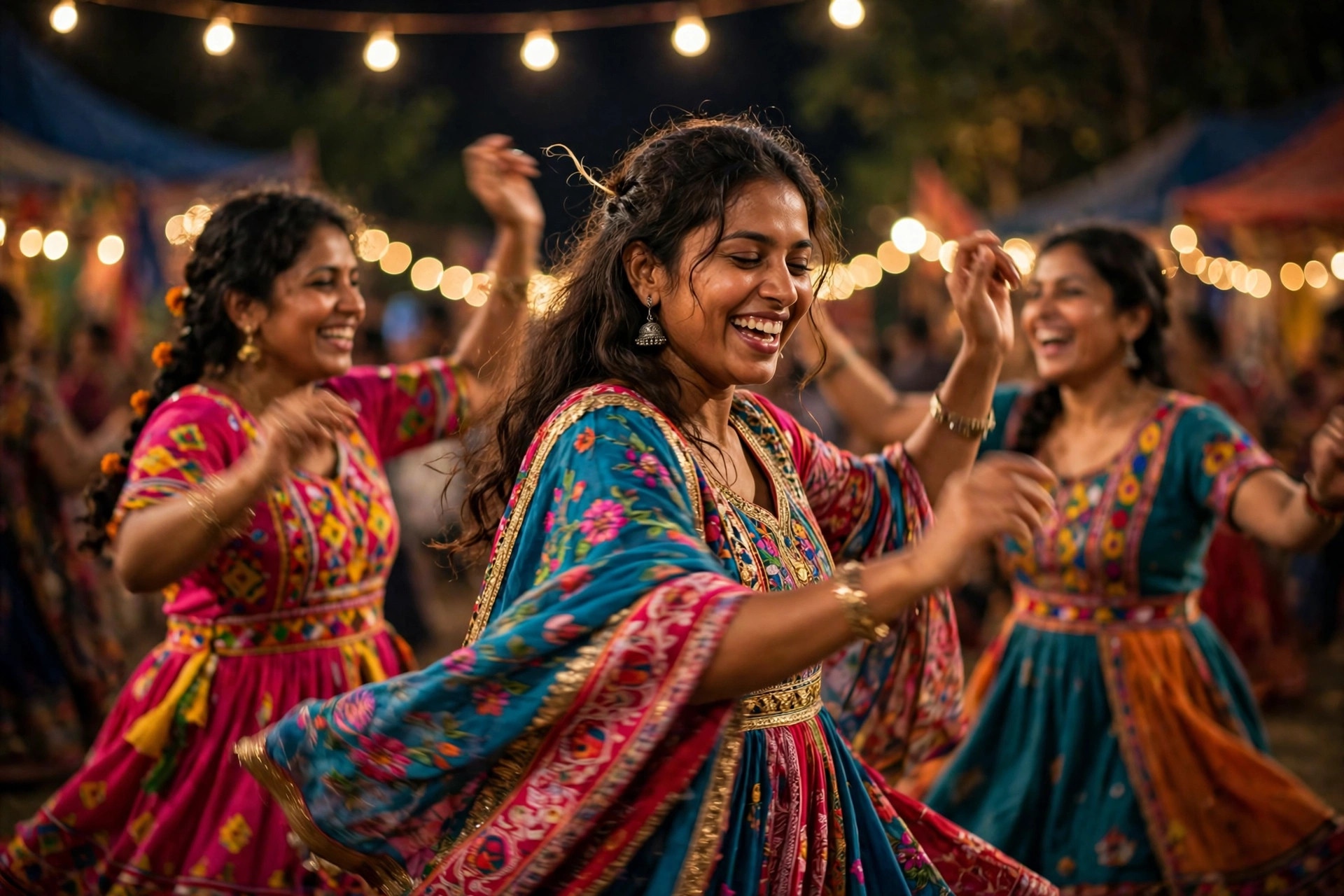
The second trend is where the numbers are most striking. Shutterstock's trend data from October 2026 shows rising buyer demand for culturally specific subjects with tiny existing libraries: Dandiya at about 8,800 images, Cempasuchil at about 40,000, Dussehra at about 50,000, and Durga Puja at about 61,000. Compare that with tens of millions of generic Christmas images and the gap is obvious. Buyers need these subjects and contributors are not supplying them.
The reason is simple: global brands need local authenticity they cannot fake. A campaign for a festival, a food brand, a travel guide or a cultural event needs the real thing — the real dance, the real food, the real street, the real clothes. A generated approximation is not a substitute, and a photo taken by a tourist passing through is rarely good enough either. The contributor who lives near the subject has the advantage.
Your own town is the opportunity. Its festivals, its street food, its craftspeople, its rituals, its neighbourhood characters — these are the underserved niches of 2027. Shoot what you know and caption it honestly: the real name of the festival, the real place, the real date for editorial files. Do not stage sacred or private moments for a sale, and do not guess at cultural details you are unsure of — accuracy is part of what makes these files valuable, and a wrong caption on an editorial image is a rejection or a complaint waiting to happen.
Trend 3: Repair, Reuse, and Everyday Sustainability
Sustainability is not a new stock subject, but in 2027 the visual language changes. Buyers are moving past the green-leaf cliché and asking for the everyday reality of living lighter: repair and longevity. A person mending clothes, a bicycle being fixed, a second-hand market stall, a refill station, vegetables growing on a balcony, food being preserved for winter — these are the images brands need to tell honest sustainability stories without greenwashing.
The key is to shoot the process, not the symbol. A leaf held up to the sun says nothing. Hands at work say everything: the needle going through fabric, the wrench turning, the before-and-after of a restored chair, the person who fixes things in your neighbourhood and has done it for twenty years. Process shots also solve a practical problem — they are hard for AI to fake convincingly, because hands, tools, and work in progress are exactly where generated images fall apart.
This trend pairs naturally with the documentary style of Trend 1. The same shoot can cover both: a real repair, in a real place, by a real person, photographed honestly. If you already shoot lifestyle or small-business subjects, you do not need new gear or a new location for this trend — you need to point the camera at the fixing instead of the finished product.

Trend 4: The 2027 Calendar Gap — Shoot the New Year First
The most actionable number in the autumn trend data is a small one: "2027 calendar" content shows rising buyer demand with only about 31,000 existing images. Campaigns for the new year need calendars, planners, fresh-start routines, goal-setting moments, first-days, winter mornings, and new beginnings — and the library is thin. That is a gap you can shoot in a weekend.
The same data lists other seasonal gaps worth knowing: snow globe at about 73,000 images, Christmas wreath at about 458,000, gold foil at about 416,000, and Black Friday at about 632,000. Notice the pattern — the gaps are specific subjects inside big seasons, not the seasons themselves. Generic Christmas has about 20.1 million images; a Christmas wreath shot well is a different search entirely. Shoot the gap, not the season.
Timing matters as much as subject. Buyers plan January campaigns in December, so files uploaded in November and December sell in January — which is why our holiday content guide stresses uploading weeks ahead of the demand. A 2027 planner photographed on a real desk in late November can be earning by the second week of January. The same data carries an evergreen note too: cyber security images, at about 726,000 files, sell steadily every month — a reminder that some subjects are not trends at all, just quiet, reliable sellers worth keeping in your portfolio.

Trend 5: Imperfect on Purpose — Texture, Emotion, and Real Light
Depositphotos' 2026 research, based on search and download behaviour from more than 40 million users across a library of more than 320 million files, identifies a clear movement away from excessive polish toward realism, emotion, texture, and intentional imperfection. The over-retouched, over-lit, over-perfect stock photo is losing ground to images that feel like they happened.
In practice this means natural light instead of flat studio light, real skin instead of smoothed skin, lived-in rooms instead of showrooms, and grain, motion, and shadow left in the frame where they belong. A photo of a grandmother's hands kneading dough does not need perfect white balance; it needs to feel like a kitchen. A street scene at dusk does not need every shadow lifted; it needs the hour to read as dusk.
There is one trap in this trend, and it is worth stating plainly: "texture" as a search term is oversaturated, at about 95.2 million images. Do not upload flat texture backgrounds and expect this trend to carry them. Use texture as a quality inside real scenes — the worn wood of a workbench, the cracked paint on a door, the fabric of a shawl — not as the subject itself. Stocksy's research adds the reason this matters: as AI-generated visuals spread, authenticity, authorship, and trust become the qualities buyers pay for. A real photo carries proof of reality. A perfect one increasingly reads as fake.
What to Stop Shooting in 2027
Trends are only half the plan. The other half is quitting the subjects whose libraries are already full. Stop shooting generic autumn backgrounds (about 13.3 million images), generic Christmas scenes (about 20.1 million), and standalone textures (about 95.2 million). Stop staging the corporate handshake, the fake-laughing team around a laptop, and the "diverse group pointing at a screen" — buyers have ten thousand of each, and AI can generate the next ten thousand in seconds.
Stop over-polishing, too. If your edit removes every wrinkle, shadow, and imperfection, you are editing toward the look buyers are moving away from. And stop shooting anything a prompt can make better and faster than your camera. The test is simple: if you can describe the photo in five generic words, skip it. If it needs a specific place, a specific person, or a specific moment to describe, shoot it. That test alone will reshape a portfolio faster than any gear upgrade.
Your December Shoot List: 10 Subjects to Capture Before January
You do not need a big production to cover these trends. One December weekend, one camera, and your own neighbourhood will do it. Work through this list and you will have 2027-trend files live before the new year.
A 2027 calendar or planner in a real workspace — fresh-start concept, shot on a lived-in desk, not a styled set.
Someone repairing something — mending, fixing, restoring; hands, tools, and the work in progress.
A local festival or cultural celebration you can attend honestly — the real event, captioned with its real name and place.
A quiet morning routine — real, unposed, in natural light: coffee, a window, a person starting the day.
A small business owner at work in their real shop — the craft, the counter, the customers, the mess and the pride.
Seasonal food being cooked at home — hands, steam, and a real kitchen, not a studio kitchen.
A second-hand market or thrift stall — full of texture, colour, and real people browsing.
Winter light through a window — a lived-in room at golden hour, the season doing the styling.
Someone learning or teaching a hands-on skill — a craft, a recipe, an instrument, a trade.
Your own street or neighbourhood at dawn — the place only you can photograph, because only you live there.
Get releases signed on the day, while everyone is present and willing — chasing a signature in January rarely works. Caption editorial files with the real place and date. Then upload in December, while buyers are still planning January.
How to Keyword and Describe 2027 Trend Photos
Trend photos fail without the right words. A beautiful Dandiya photograph titled "Indian festival" will not be found; titled "women dancing Dandiya at a Navratri celebration in Gujarat at night," it will. Buyers search for the specific thing, so the specific words must be in the title, the description, and the first ten keywords — the slots that carry the most weight on Adobe Stock.
Write the description the way our stock photo descriptions guide teaches: one clear sentence, subject first, under 70 characters for the core, in plain English, with the exact phrases buyers type. Then build the keyword stack with our advanced keywording guide — five layers, most specific first, no repeated or plural pairs, no keyword stuffing in the description field. The discipline is the same for every trend: name the specific subject, the real place, the real action, and the use case. "2027 planner on a wooden desk" will always beat "new year concept" in search, because one of those phrases is what a buyer actually types.
A 30-Day Plan: From Trend List to Live Portfolio
Trends only pay if they become files. Here is a four-week plan that takes this article from reading to revenue.
Week 1 (21–27 November) — Choose and prepare. Pick three trends from this guide that fit what you can actually shoot. Run a portfolio audit first, so you know what you already have and where the gaps are. Prepare blank model and property releases, charge batteries, and plan three shoots around your own neighbourhood.
Week 2 (28 November–4 December) — Shoot the list. Work through the December shoot list above. Shoot each subject in series — twenty frames of one repair job beats twenty single frames of twenty different things — and cull hard the same evening, while you still remember which frames were real.
Week 3 (5–11 December) — Edit, keyword, submit. Edit for honesty, not perfection. Write descriptions first, derive the first ten keywords from the description, and submit in small batches so a rejection pattern shows up early instead of after a hundred files.
Week 4 (12–18 December) — Review and top up. Check acceptance rates, fix the rejections that have a clear cause, and upload the 2027 calendar and fresh-start batch last, closest to the moment buyers plan January campaigns. Then track what sells in January and double down on it in February. Trends reward the contributor who acts in December, not the one who reads about them in March.
Key Takeaways
2027 rewards specific over generic: a specific person, place, culture, moment, and story beats five hundred generic files.
Documentary-style real life is the biggest trend — brands want photographs showing how people actually live, not staged symbols.
Culturally specific subjects are sharply undersupplied: Dandiya (~8,800 images), Cempasuchil (~40,000), Dussehra (~50,000), Durga Puja (~61,000).
Shoot the 2027 calendar gap now: rising demand, only ~31,000 images, and December uploads catch January campaign planning.
Imperfection is in demand — realism, emotion, texture, and real light — but "texture" as a standalone subject is oversaturated at ~95.2 million images.
Keyword the specific words buyers type, describe in one clear sentence under 70 characters, and run the 30-day plan so trends become live files before January.
FAQs
Is it too late to shoot for 2027 trends? No. Trend demand runs all year, and December uploads catch January campaign planning — buyers choose visuals weeks before a campaign launches. A 2027 planner or a repair series shot in December can be earning by mid-January, and the cultural subjects on this list are undersupplied in every month, not just in season.
Will AI-generated images kill these trends? These trends are the ones AI fakes worst. Real people, real places, real cultures, and real moments cannot be generated with proof behind them — and as AI visuals spread, buyers increasingly pay for authenticity, authorship, and trust. Documentary and editorial work is the moat, not the casualty.
Do I need to travel to shoot cultural subjects? No. Your own town's festivals, food, crafts, and neighbourhood characters are the undersupplied content. Shoot what you know, caption it accurately with the real name and place, and do not stage sacred or private moments for a sale.
How many 2027-trend photos should I upload? Start with 30 to 50 strong files across three trends, shot in series with depth in each subject. Depth beats volume: twenty frames of one real repair job teach the algorithm what your portfolio is about far better than twenty unrelated singles.
What if my trend photos get rejected? Most rejections are technical, not trend-related — focus, noise, exposure, or a missing release. Read the rejection reason, fix that one thing, and resubmit. If a whole batch is rejected for the same reason, stop and fix the cause before uploading more; a rejection pattern caught after ten files costs far less than one caught after a hundred.