Drone Stock Photography in 2026: Rules, Licensing, and What Actually Sells
By raof010 · Published October 30, 2026 · Updated October 30, 2026
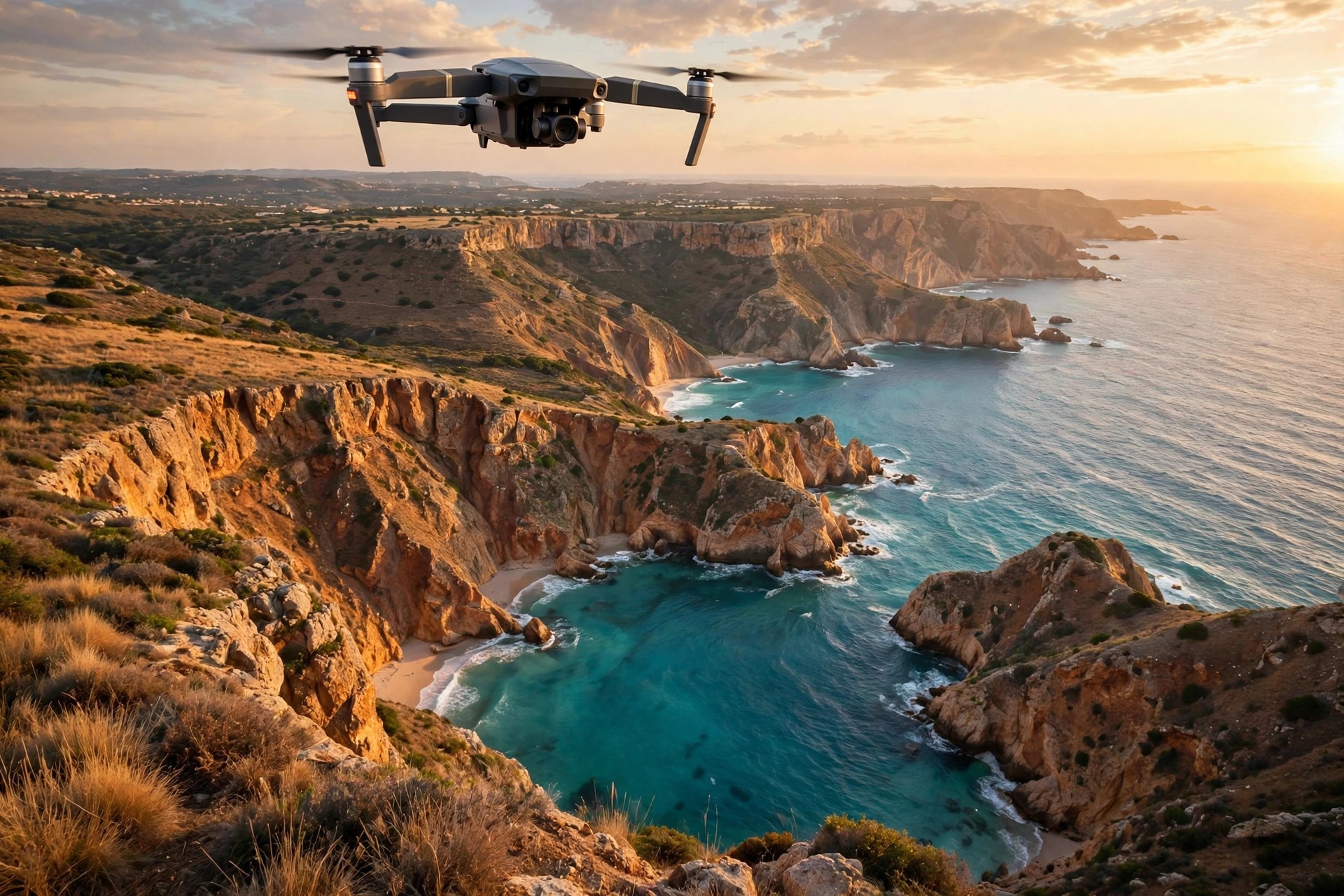
A drone gives a contributor something a ground-level camera cannot: a viewpoint buyers cannot easily recreate on a deadline. A coastline from 300 feet, a construction site in progress, a farm at harvest, a city waking up — these are images a designer, a publisher, or a real-estate marketer will pay for because flying there themselves would cost a day, a permit, or a crew. That advantage disappears fast, though, if the flight was illegal, the airspace was controlled, or the property in frame was never cleared. Drone stock photography is not just a shooting skill. It is a compliance skill first, and a portfolio skill second. Get the rules right, and aerial work becomes one of the most defensible niches a contributor can own. Get them wrong, and the same files become rejections, or worse, a legal problem you cannot keyword your way out of.
Why Aerial Work Is Still Hard to Fake
Generative AI has flooded the easy stock categories with plausible sunsets, handshakes, and studio portraits. Aerial photography resists that flood for a simple reason: buyers can tell when an aerial image is real. True altitude shows real geography, real shadows, real weather, and real scale. A fake coastline looks fine at a glance and falls apart the moment a local buyer checks the road layout, the light direction, or the shape of the shore. Real drone work carries evidence of place, and that evidence is exactly what editorial buyers, tourism boards, and property marketers pay for.
Aerial work also fits the niche logic that already works on this site. In our guide to 10 underserved niches, the winning subjects were specific, access-gated, and hard to copy in an afternoon. A drone portfolio is the same idea with altitude added: your access is a licence, a flight plan, and local knowledge, not just a camera. A contributor who can legally fly a coastline at dawn, in the right airspace, with the right light, owns a set that a contributor without that access cannot reproduce by typing a prompt.
None of that makes drone stock a shortcut. The gear costs more, the learning curve is steeper, and every flight carries rules that a ground shoot never triggers. The honest pitch is this: drone stock is worth it when you already fly, or when you are willing to get properly certified and build slowly. It is not worth buying a drone for one weekend and expecting a portfolio.
The First Rule: Intent Decides the Licence
In the United States, the Federal Aviation Administration does not classify a flight by the drone you own. It classifies it by why you flew. That single distinction decides almost everything else, so learn it before your first stock flight.
Recreational flying means flying purely for personal enjoyment, with no business purpose at all. Recreational flyers must pass the free online Recreational UAS Safety Test, known as TRUST, and carry proof. They must also register any drone weighing 250 grams or more, for a $5 fee that covers all their aircraft for three years, and most drones must broadcast Remote ID. TRUST is a safety-awareness test, not a licence, and it grants zero commercial privileges.
Commercial flying means any flight that serves a business purpose, however small. The FAA's definition is deliberately broad: flying to sell the photos, flying for a client, flying for a monetised channel, or flying to build a portfolio you intend to sell from all count as commercial. Commercial flying requires a Remote Pilot Certificate under Part 107, the rule covering small unmanned aircraft under 55 pounds. Getting it means passing an in-person knowledge test, usually costing around $175 at a testing centre, and being at least 16 years old. Under Part 107, every aircraft you fly must be registered, regardless of weight, so the sub-250-gram exemption that recreational flyers enjoy does not apply to you.
The trap for contributors is the middle ground that does not exist. There is no "I flew for fun and only later decided to sell it" category in the FAA's eyes. If the photos end up for sale, the flight that produced them was serving a business purpose. Contributors who plan to sell drone work should therefore treat Part 107 as the starting point, not an upgrade to consider later. Confirm the current requirements on the FAA's own pages before you book a test, because fees, test content, and Remote ID rules do change.
Airspace, Altitude, and the Pre-Flight Checklist
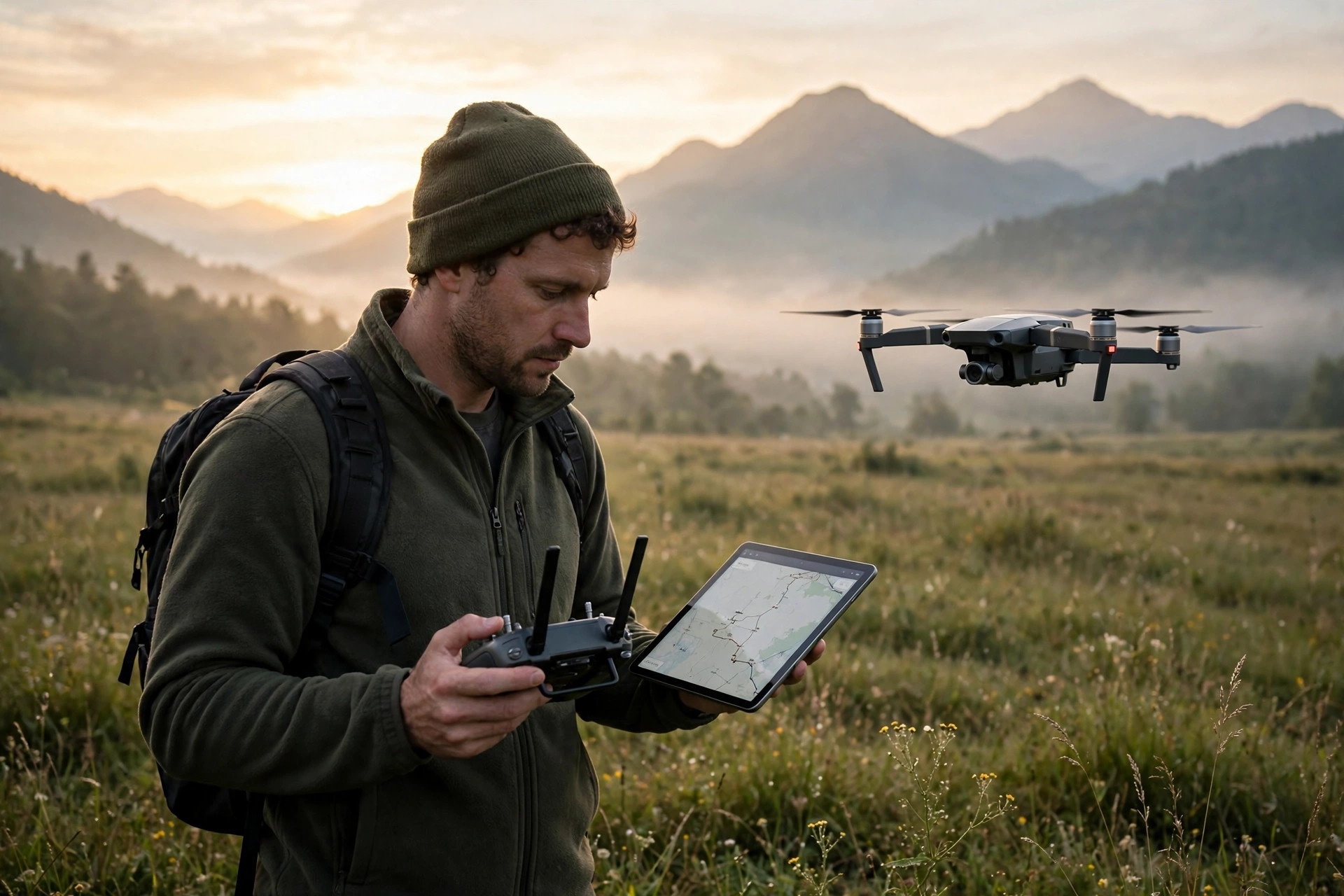
A Part 107 certificate does not give you the sky. It gives you the right to fly within a set of limits, and the most common drone rejections in stock have nothing to do with image quality: they come from files shot where the pilot should not have been. Run this checklist before every stock flight.
Altitude: The standard ceiling is 400 feet above ground level, or 400 feet above a structure when you are within 400 feet of it. Higher needs a waiver, not a hope.
Controlled airspace: Flying near airports and in controlled airspace needs authorisation, usually through LAANC or FAA DroneZone, before takeoff. The facility-map altitude for that grid is the limit, not the 400-foot default.
Visual line of sight: Keep the drone where you can see it with your own eyes, without binoculars. Flying beyond visual line of sight is a waiver operation, not a normal stock shoot.
People and crowds: Do not fly over people as a default. Part 107 has categories for operations over people, with aircraft and pilot conditions attached. A busy beach, a festival crowd, or a sports stadium is not a casual shoot location.
Night flying: Night operations are allowed under Part 107 with the required training and anti-collision lighting visible for three statute miles. Do not assume a daytime certificate covers a night shoot without checking the current rule.
Remote ID: Most drones must broadcast Remote ID in flight. A drone without it, or with it switched off, is not a legal stock platform.
Local rules on top of federal rules: National parks, many state parks, military areas, prisons, and some city parks ban or restrict drone takeoff and landing even where federal airspace looks open. Check the land manager, not just the airspace map.
Outside the United States, do not export American rules. The European Union runs its own Open, Specific, and Certified categories, with subcategories and registration duties that differ by drone weight and risk. The United Kingdom, Canada, Australia, and Pakistan each have their own regulator, registration system, and altitude and distance rules. If you fly outside your home country, read that country's regulator page before you pack the drone, and never assume a certificate from one country transfers to another.
Commercial or Editorial? The Licensing Decision for Every File
Airspace legality gets a file accepted for review. Licensing decides whether it can be sold commercially, which is where the larger buyer pool and the higher-value licences live. The rule is the same as on the ground, only the scale is bigger: anything identifiable needs paperwork, and aerial views make identifiability easy to miss.
People from above are still people. A person recognisable in a drone photo, even as a small figure with a distinctive uniform, vehicle, or context, needs a model release for commercial licensing. Crowds shot from altitude are often genuinely anonymous, but the moment one person becomes the subject, sharp, centred, and identifiable, the crowd exception ends. If you cannot get releases, file the image editorially, and only if it genuinely documents a real event or place rather than a staged scene.
Private property from above is still private property. A distinctive home, a recognisable hotel, a branded resort, a factory with visible logos, or a famous landmark can all need a property release for commercial use. Shooting from public airspace does not erase the property question, and agencies maintain known-restrictions lists for locations that cannot be cleared at all. Our full guide to model and property releases covers what makes a release valid, how to collect one on set, and the rejection traps that apply just as much at 300 feet as at eye level.
Trademarks hide in aerial frames. Rooftop signage, branded delivery vehicles, sponsor banners at events, and distinctive product shapes all survive at altitude. Check the full frame at 100 percent zoom before submission, not just the centre of the image, and remove, crop, or re-file anything you cannot clear.
Editorial is not a loophole. Genuinely documentary aerial editorial, a real protest, a real flood, a real construction milestone, can sell without releases. Staging a scene with paid models and calling it editorial does not qualify, and reviewers reject staged editorial faster than any other category because the deception is the point. If a shoot was arranged for stock, license it commercially with releases, or do not shoot it as editorial.
What Actually Sells: Seven Aerial Subjects With Real Buyers
Not every beautiful aerial image is a stock image. Buyers search for subjects they can use in a layout, a campaign, or a report. These seven have repeatable buyers, and each one rewards a series rather than a single hero shot.
Coastlines and beaches at usable angles. Tourism boards, hotels, and travel publishers buy coastline sets: wide establishing shots, top-down beach patterns, and low oblique views with copy space for headlines. Shoot the same beach at dawn and midday, in summer light and storm light, and you have a series, not a single.
Construction and infrastructure progress. Engineering firms, developers, and trade publishers buy progress sequences: the same site monthly, from the same altitude and angle, so the sequence reads as a story. Consistency matters more than drama here.
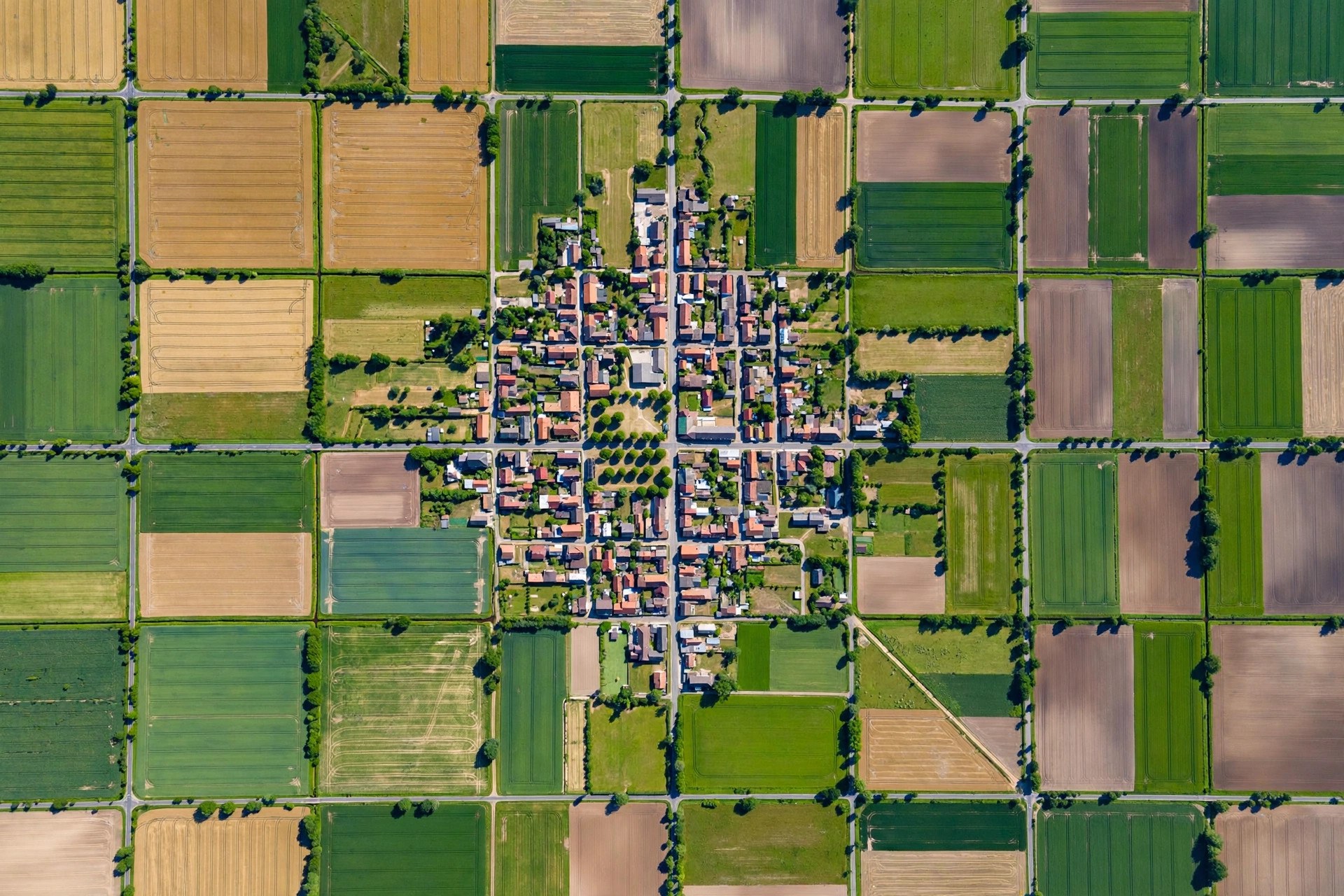
Agriculture and land use. Farm publishers, food brands, and environmental organisations buy field patterns, harvest work, irrigation, and seasonal change. Top-down geometry sells well, and the same field across seasons is a repeatable product.
Real estate and neighbourhood context. Agents and property platforms buy the context around a property, the street, the park, the commute route, not just the roof. Keep the property generic unless you have a signed property release for a specific, recognisable home.
Roads, traffic, and logistics. Transport and business publishers buy highways, ports, warehouses, and delivery flows from above. These images illustrate stories that ground photography cannot, and they age slowly because infrastructure changes slowly.
Events and festivals from a safe distance. Editorial buyers want the scale of an event: the crowd pattern, the route, the venue footprint. Fly from a legal, authorised position outside the crowd, never over it, and file editorially with accurate captions.
Seasonal landscapes with a clear subject. Autumn forests, snow-covered villages, spring blossom from above, and desert roads all sell when the subject is specific and the light is clean. Generic "pretty from above" without a subject is the aerial equivalent of a sunset: oversupplied and hard to find.
Shooting Aerial Files That Pass Review
Reviewers judge drone files at 100 percent zoom, and altitude magnifies every technical fault: vibration, haze, noise, and soft focus all read larger from the air. The discipline is the same as ground stock, with a few aerial additions.
Fly slow and smooth. Fast, jerky movements create motion blur and rolling-shutter artefacts that no export sharpening fixes. For stills, hover, let the gimbal settle, and then shoot. For video, plan one movement per clip.
Watch the light, not just the altitude. Low sun gives long shadows that reveal terrain and texture, but it also blows out water and rooftops. Midday sun flattens a landscape but gives clean, even exposure for top-down patterns. Match the light to the subject, and bracket when the contrast is extreme.
Check focus and noise at full size. Small sensors punish high ISO faster than large ones, and haze at altitude softens distant detail. Our guide to camera settings for stock photography covers the aperture, shutter, ISO, and 100-percent check that apply here too: judge the file on a large screen, not on the controller display.
Respect the file specs. Adobe Stock requires photos in JPEG with an sRGB profile, at 4 to 100 megapixels, with a maximum file size of 45 MB. Shutterstock requires at least 4 megapixels, JPEG recommended, sRGB, with browser uploads capped at 50 MB. A heavily cropped aerial frame can drop below 4 megapixels fast, so frame wide and crop with the floor in mind.
Shoot stills and video from the same flight. A 20-second smooth clip from a location you already flew for stills costs little extra and opens a second income stream. The royalty maths behind that choice, and why video pays more per sale while photos pay more often, is covered in our comparison of stock video vs stock photos.
Metadata for Aerial Files: Say Where, Not Just What
Aerial files fail on discoverability more than on beauty. A buyer searching for "aerial view of olive groves at harvest" will not find a file titled "drone shot" and keyworded "sky, clouds, nature". Write titles and keywords from the buyer's brief: the place type, the activity, the season, the angle, and the use. Include the viewpoint in the first keywords, top-down, oblique, or low-altitude, because buyers filter by angle more than contributors expect.
Be precise about location in titles and keywords only where you are sure. A wrong place name is worse than a generic one, because a local buyer will spot it and a reviewer may flag it. If you are unsure of a location name, describe the landscape accurately and leave the place name out. Do not invent a location, a landmark, or an event in metadata to make a file sound more sellable.
For video, the same rule applies with one addition: describe the movement. "Slow forward push over a coastal road at sunrise" tells a buyer whether the clip fits their edit. "Drone video" tells them nothing. Keep the movement, the subject, and the light in the first line of the description, because that is what a buyer reads before previewing.
A 30-Day Starter Plan for Drone Stock
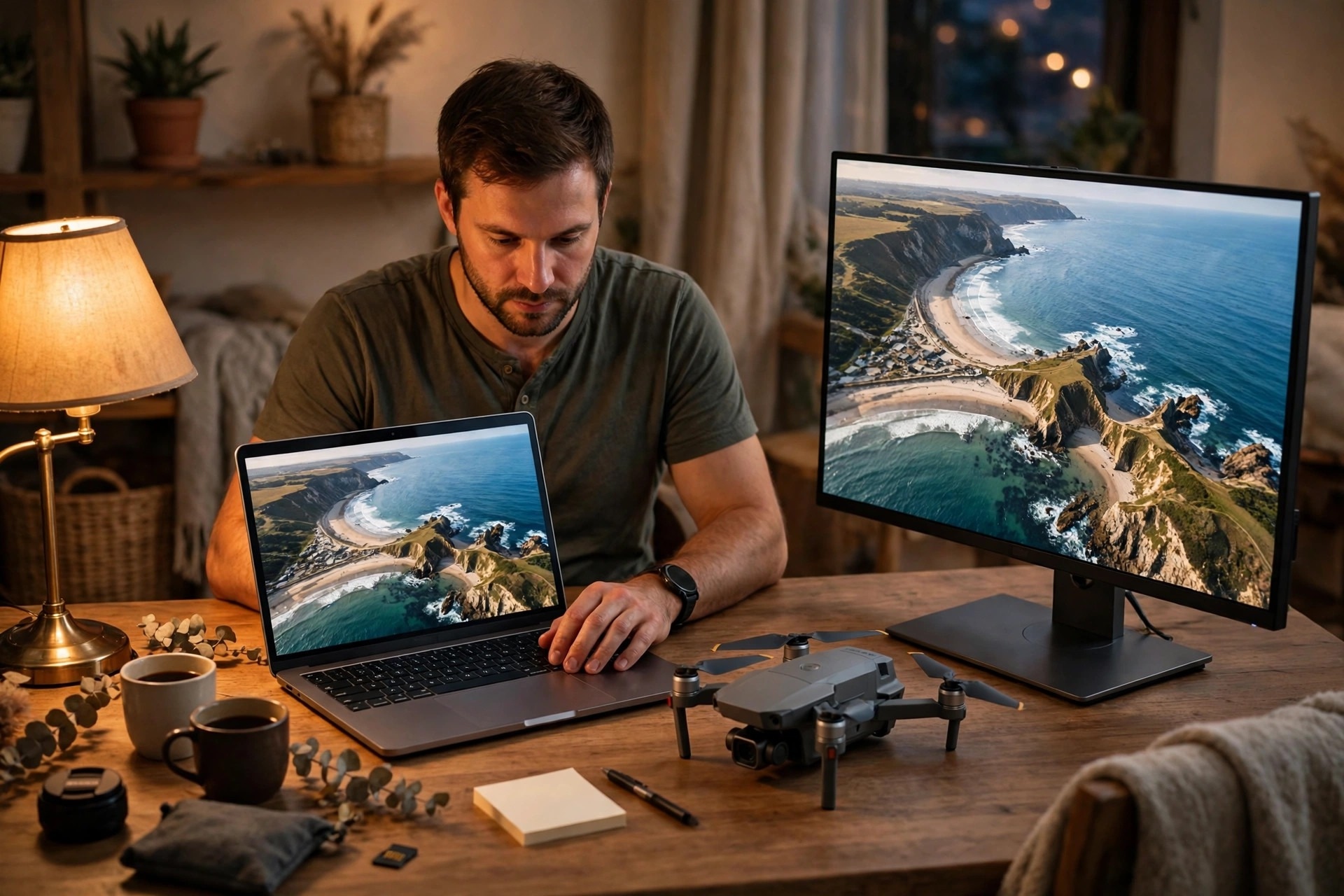
Week 1: Get legal and local. Confirm your certificate and registration, check Remote ID on your aircraft, and map three legal flying locations near you with their airspace status, land-manager rules, and best light. Do not shoot for stock until this list exists.
Week 2: Shoot one subject, three ways. Pick one subject from the list above and shoot it as a series: a wide establishing frame, a top-down pattern, and a low oblique with copy space, plus one smooth 20-second clip. Twenty genuinely different frames beat fifty near-duplicates.
Week 3: Keyword, release-check, and submit. Title each file from the buyer's brief, attach releases where needed, and file anything uncleared as editorial only if it genuinely qualifies. Submit the series together so buyers find a usable set.
Week 4: Review honestly. Check views and rejections, not just approvals. Which frames were found? Which titles were too vague? If the subject produced no views and no joy in flying it, that is useful evidence. Pick a different subject next month rather than forcing the same one.
Judge the month on three questions: were the flights legal and stress-free, did the files get views within the first weeks, and can you name the next twenty shots in the same subject without repeating yourself? Two yeses out of three is a subject worth a second series. Anything less is a hobby flight, not a portfolio direction, and that distinction saves more money than any new drone will earn.
Drone-Specific Rejections to Avoid
Illegal airspace, visible in metadata. Flight logs, location data, and captions can reveal a controlled-airspace flight. If you would not want the flight log published, do not submit the file.
People or property without releases, filed as commercial. Altitude does not anonymise a recognisable person or a distinctive property. Re-file editorially only when the content genuinely qualifies.
Haze and vibration presented as style. A soft, hazy aerial frame reads as a technical failure, not an artistic choice, unless the subject is unmistakably sharp somewhere in the frame.
Over-processed skies and colours. Heavy saturation and HDR halos are the fastest way to turn a real aerial image into something that looks generated. Keep edits restrained and consistent across a series.
One hero, no set. A single stunning aerial image with no supporting frames is hard for a buyer to build a layout around. Shoot the set, every time.
Key Takeaways
Intent decides the licence: any flight that serves a business purpose, including selling the photos, is commercial flying and needs Part 107 in the United States, not just TRUST.
Altitude has limits: 400 feet above ground level, controlled-airspace authorisation before takeoff, visual line of sight, and Remote ID are the default, not the exception.
Licensing follows the frame: recognisable people need model releases and recognisable private property needs property releases, even shot from the air, and staged scenes are never editorial.
Buyers buy sets and subjects: coastlines, construction progress, agriculture, real-estate context, logistics, events, and seasonal landscapes sell when shot as series with copy space and clean metadata.
Test before you invest: one legal subject, one series, one honest month of review beats a new drone and a hundred unsorted uploads.
FAQs
Do I need Part 107 if I only sell a few drone photos?
Yes, in the United States, if the flight serves a business purpose. Selling even one photo makes the flight commercial in the FAA's broad definition. Recreational TRUST covers purely personal flying only, with no business angle at all. Confirm the current rule on the FAA's own pages.
Can I sell drone photos taken before I got certified?
Be very careful here. If the flight was flown recreationally and you later decide to sell the files, the original intent question matters, and agencies and regulators may view the sale as evidence of a commercial purpose. The safe route is to fly new stock flights under the correct certification and to get legal advice before selling older files that were not flown commercially.
Do I need a property release for a house seen from the air?
For commercial licensing, yes, if the property is recognisable and distinctive. A generic rooftop in a wide neighbourhood view is different from a clearly identifiable private home as the subject. When in doubt, get the release, crop wider, or file editorially only if the content genuinely qualifies.
What drone do I need to start selling stock?
Start with what you can fly legally and well, not the most expensive aircraft. A sub-250-gram drone is easier to fly recreationally, but under Part 107 it must still be registered, and its small sensor struggles in low light and haze. A mid-range camera drone with a 1-inch sensor, a stable gimbal, and RAW stills is a more realistic stock tool. Judge by the files at 100 percent zoom, not by the marketing.
Is drone video worth more than drone photos?
Per sale, usually yes, and per hour of production, usually no. Video clips cost far more time to shoot, stabilise, grade, and render, and they sell less often than photos. The strongest drone portfolios sell both from the same flights: stills for volume and steady income, clips for the higher per-sale ceiling.